
Bicycle Tire Pressure Calculator
Add your total weight with bike, select the tire width, and choose a setup to get the ideal tire pressure.
Reference: Tire Sizes by Discipline & Conversions
| Bicycle Type | Inch Size (if applicable) | Equivalent Width (mm) |
|---|---|---|
| Track | - | 19 - 23 |
| Road | - | 23 - 32 |
| Gravel / Cyclocross | - | 32 - 50 |
| BMX | 1.75" - 1.95" | 44 - 50 |
| 2.10" - 2.40" | 53 - 61 | |
| Mountain (MTB) | 1.95" | 50 |
| 2.10" | 53 | |
| 2.25" | 57 | |
| 2.35" | 60 | |
| 2.40" | 61 | |
| 2.50" | 64 | |
| 2.60" | 66 | |
| 2.80" | 71 | |
| 3.00" | 76 |
How It Works
Think of tire pressure as a balancing act between speed and comfort. This calculator starts with a baseline, typically 70 psi for a 150lb system on 28mm tires, and adjusts based on your unique inputs. If you are heavier, the calculator increases the pressure to prevent bottoming out. If your tires are wider, the calculator decreases it because there is more air volume to support the load. Finally, we apply a specific adjustment for tubeless setups, which safely run lower pressures for better grip, capped by safety limits to ensure your tires do not blow off the rim on modern, hookless wheels.
Why You Should Check Your Tire Pressure
Checking your tire pressure before every ride is not just a "pro" habit, it is the single most important thing you can do for your bike’s performance and your own safety. Think of your tires as your bike’s only point of contact with the road; when the pressure is off, everything else suffers.
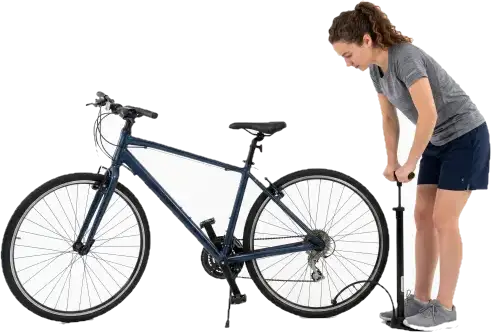
If your pressure is too low, you are inviting a "pinch flat," where the tube gets crushed against the rim, leaving you stranded with a flat. More subtly, under-inflated tires increase rolling resistance, turning every pedal stroke into an uphill battle against the asphalt. It feels sluggish, heavy, and drains your energy needlessly.
On the flip side, over-inflated tires can feel like riding on wooden wheels. You will bounce over every bump, losing precious traction in corners where you need it most. Proper pressure allows the tire to deform just enough to grip the road, smoothing out road buzz and providing that "connected" feeling that makes cycling a joy rather than a chore.
Temperature changes also wreak havoc; air expands and contracts, meaning the pressure you set on a cool morning might change significantly by midday. By checking your pressure regularly, ideally with a quality gauge rather than the "squeeze test", you ensure consistent, predictable handling. It takes thirty seconds, protects your wheels from damage, and transforms a harsh, vibrating ride into a smooth, efficient glide. Do not just ride; ride optimized. Your bike, and your nerves, will thank you.
Disclaimer
You are advised to consult a bike mechanic before engaging in any technical task. This page provides information just educational purpose. The webmaster is not responsible for any mechanical issue during process.